

How to Avoid Sheer Fabrics in Clothing
Last Updated: November 3, 2026
Quick Summary
To avoid sheer fabrics in clothing, check the weave, weight, and color before buying: tight weaves, thicker cloth, and dark shades block light best. Choose opaque fabrics like jersey, ponte, and bamboo jersey, and add thin, close-fitting layers such as slips, camisoles, or bodysuits where sheer cloth stretches.
- A fabric is sheer when light passes through it easily, which loose weaves, thin cloth, and light colors allow.
- Assume chiffon, voile, and tulle are sheer until proven otherwise, and zoom in on model photos at shoulders and hips.
- Keep layers one to two inches shorter than the hem and at least one inch thinner than the sheer garment.
- Sheer cloth goes transparent where it stretches: across the bust, hips, shoulders, and thighs.
- Wash sheer pieces in a mesh bag, skip the dryer, and store them flat to prevent snags.
Table of Contents
- Why Sheer Fabrics Sneak Into Your Wardrobe
- How to Check Fabric Opacity Online Before You Buy
- Opaque Fabrics for Modest Clothing That Hold Up
- The Best Layering Pieces for Sheer Dresses
- Layering by Body Type Without Adding Bulk
- Repairing Snagged or Pulled Sheer Fabric
- Shop Opaque Basics Built for Modest Layering
- Frequently Asked Questions
Why Sheer Fabrics Sneak Into Your Wardrobe
Sheer fabrics show up more than you expect. A white tee looks solid online, then turns see-through in daylight. A "lined" dress arrives with a thin slip that clings. This comes up often, and the cause is almost always the same: light passes through the cloth.
A fabric is sheer when light passes through it easily. Three things decide how much gets through:
- Weave: Loose, open weaves let light through. Tight weaves block it.
- Weight: Thinner cloth is more translucent than thicker cloth.
- Color: Light shades hide less than dark ones, even in the same fabric.
The Weave, Weight, and Color Factors
Chiffon, organza, tulle, georgette, and voile are the classic offenders. Each is lightweight and delicate by design, which is why they drape so well and reveal so much.
Color matters just as much. A navy jersey and a white jersey can share the same weight, yet only one turns transparent under office lighting.
Sheerness is not fixed. Stretch a knit across a hip or shoulder and the weave can open.
How to Check Fabric Opacity Online Before You Buy
You can judge opacity online if you read listings like a skeptic. Start with the fabric name: if it says chiffon, voile, or tulle, assume sheer until proven otherwise.
Then look at the photos. Zoom in on the model's shoulder and hip, where fabric stretches tight, and check whether you can see an undergarment outline or a hand behind the cloth.
Reading Product Listings and Photos Carefully
A few signals separate honest listings from vague ones:
- Fabric weight or density: "Opaque" is a claim. A named fabric like ponte or jersey is evidence.
- Lining details: "Fully lined" means something. "Self-lined bodice" often means a single thin layer.
- Model photos in natural light: Studio flash flatters everything. Outdoor shots reveal more.
Watch out: a listing that never names the fabric is usually hiding a thin one. Ask before you buy, or move on.
Opaque Fabrics for Modest Clothing That Hold Up
The most reliable modest pieces come from fabrics with tight weaves and enough weight.
Ribbed knits can add density without bulk, which is why ribbed pieces are often worn as a base layer under sheer dresses and open-weave tops.
The Canadian General Standards Board guide to textile labeling explains how fiber content must be disclosed on labels, which helps you spot a thin blend before it arrives.
Look for these markers on any listing:
- A named fabric, not just a color
- A stated weight or "opaque" claim tied to a specific fabric
- Reviews that mention coverage, not just fit
The Best Layering Pieces for Sheer Dresses
The best layering pieces for sheer dresses are thin, close-fitting, and skin-toned or matching. A slip, camisole, or bodysuit underneath adds coverage without changing the dress's line; the layer should disappear, not compete.
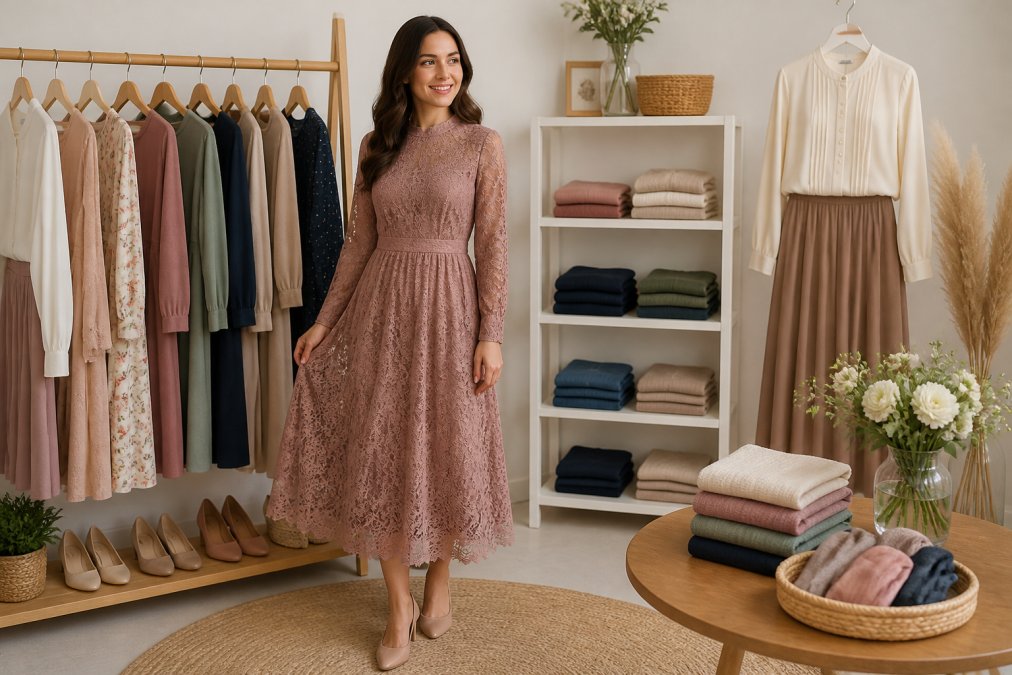
Woman adjusting a camisole layer under a sheer dress in a sunlit bedroom with a mirror
Start with the piece closest to your skin. A bamboo scoop-neck shell sits flat under a sheer dress and adds a clean neckline. A full slip handles skirts and dresses in one step.
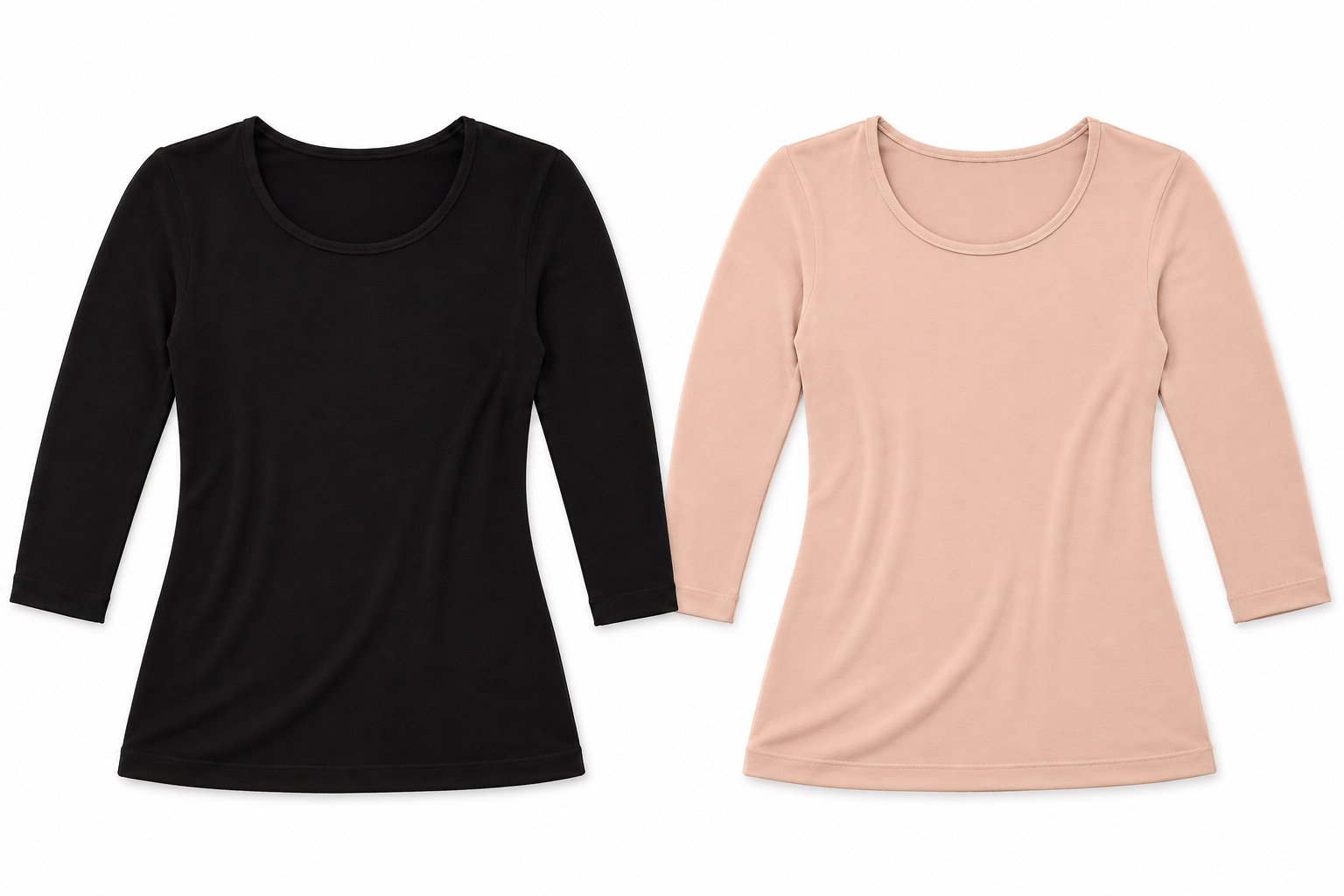
Bamboo Shell - Scoop Neck - *3 Colors
Slips, Camisoles, and Bodysuits That Stay Hidden
Each layer solves a different problem, and the right one depends on the dress, not on habit:
- Full slip: Best under sheer skirts and unlined dresses. Choose a length just above the hem so it never peeks below. A slip with slight stretch at the bust stays put; a rigid woven slip shifts as you walk.
- Half slip: Works under sheer skirts when the top is already covered. It is the lightest option for warm rooms because it leaves the torso free.
- Camisole: Handles sheer bodices and low necklines. A scoop neck disappears under a V-neck dress; a straight neck shows at the edge of a square neckline, so match the neckline shape, not just the color.
Match the layer to your dress color, not your skin, when the dress is dark. For light dresses, a skin-toned layer disappears best. People often buy a white slip for a white dress and then see its outline in daylight; a tone one shade warmer than the dress usually vanishes instead.
Matching the Layer to the Dress Silhouette
The layer has to follow the dress's cut, or it creates a new line where you did not want one:
- Sheer maxi or midi skirt: A half slip cut two inches shorter than the hem covers the body without showing at the ankle. A full slip works if the bodice is also sheer.
- Sheer button-down or shirt: A camisole or shell underneath, not a full slip. Tuck the shell into the waistband so it does not bunch under the shirt's hem.
- Sheer sleeves or sheer back: A long-sleeve shell or a high-back bodysuit. A regular camisole leaves the back bare, which defeats the purpose.
Watch out: a layer that is thicker than the sheer garment changes the drape. Chiffon over a thick cotton tank hangs stiffly; chiffon over a thin bamboo shell still floats.
Each layering piece solves a different coverage problem, so match it to the dress rather than to habit.
Layer |
Best for |
Key detail |
|---|---|---|
Full slip |
Sheer skirts and unlined dresses |
Length just above the hem so it never peeks below |
Half slip |
Sheer skirts when the top is covered |
Lightest option for warm rooms; leaves torso free |
Camisole |
Sheer bodices and low necklines |
Match the neckline shape, not just the color |
Bodysuit |
Fitted dresses with no riding up |
Wide gusset sits flat; narrow one bunches |
Long-sleeve shell |
Sheer sleeves or sheer back |
Close-fitting shell in the same tone as the dress |
Layering by Body Type Without Adding Bulk
Bulk comes from the wrong layer, not from layering itself. The fix is to match the layer's thickness and length to where you need coverage. Most guides stop at naming a body shape; the useful part is knowing which layer fails on which frame and why.
Where Sheer Fabric Actually Fails
Sheer cloth goes transparent where it stretches, not where it hangs. That means the failure points are predictable:
- Across the bust, where a fitted bodice pulls the weave open.
- Across the hips and seat, where a skirt or dress stretches when you sit.
- At the shoulders and upper back, where arm movement pulls the fabric tight.
Cover those four zones and the rest of the garment can stay single-layer, which is why a thin layer at the hip does more than a thick layer worn everywhere.
Matching the Layer to the Frame
- Pear shape: The hips and seat are the stretch zone, so a half slip under skirts plus a light shell on top covers both failure points without adding volume at the waist. A full slip adds fabric exactly where this frame does not need it.
- Tall frames: Full-length leggings add coverage under short or sheer hems and solve the thigh-stretch problem a half slip leaves exposed when you walk.
- Petite frames: Three-quarter leggings cover without extra length at the ankle, where a full-length layer bunches under a midi hem and creates a visible ridge.
Length and Thickness Rules That Prevent Bulk
Two numbers do most of the work. Keep the layer at least one inch thinner in fabric weight than the sheer garment, and keep it one to two inches shorter than the hem it sits under. A layer that matches the outer garment's length exactly creates a double hem that reads as bulk even when the fabric is thin.
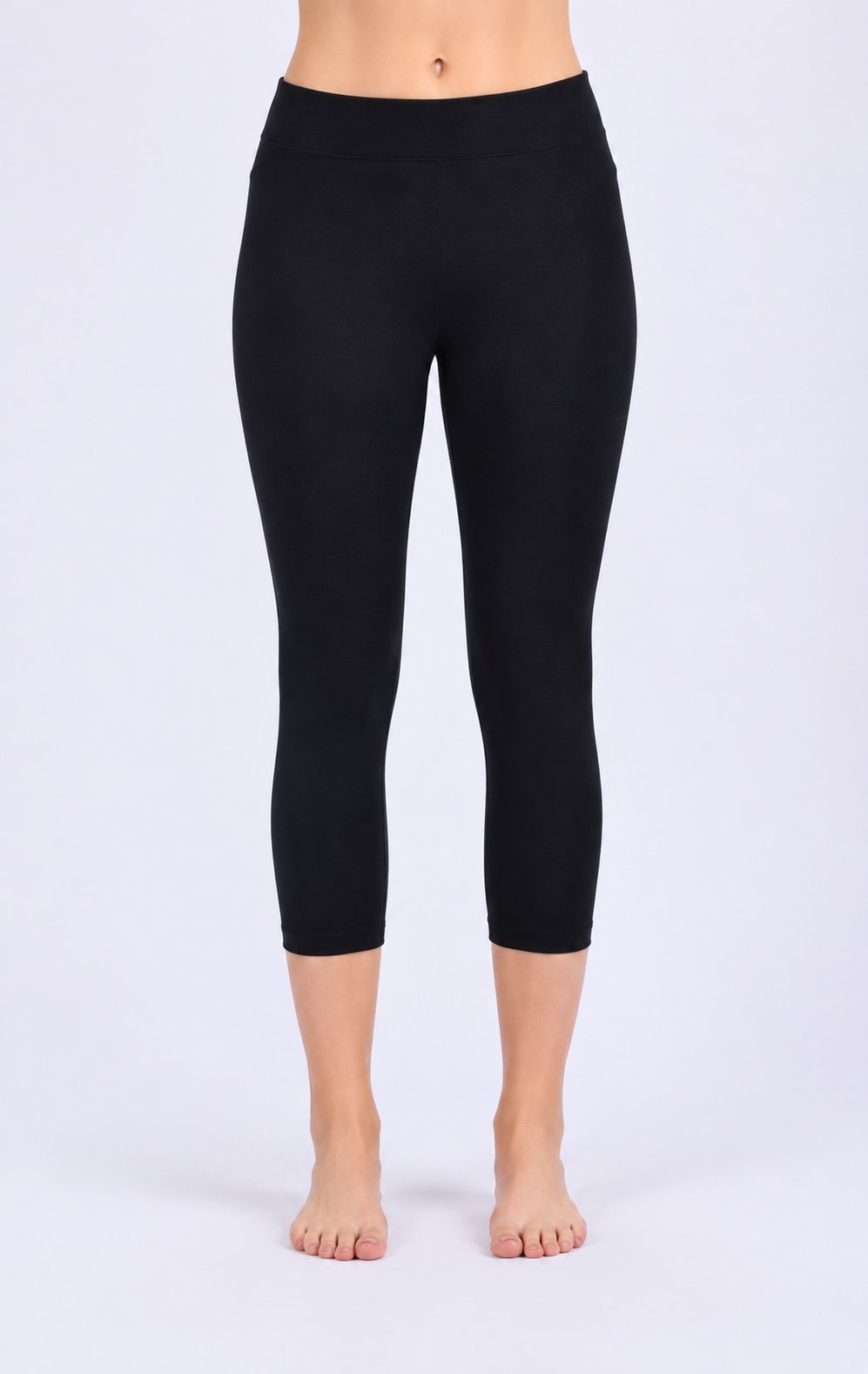
People often size up the layer for comfort and then see it bunch.
Watch out: a seamless layer is not automatically invisible. Laser-cut edges can still show a ridge under thin chiffon; a bonded or folded edge lies flatter.
The rule is simple. Add coverage where the fabric is thin, and keep the rest close to the body. A thin layer beats a thick one every time.
Repairing Snagged or Pulled Sheer Fabric
A snag does not mean the end of the garment. Most pulls in chiffon, georgette, and voile can be fixed at home in minutes.
Try this order:
- Do not cut the pull. Cutting makes a hole.
- Stretch the fabric gently around the snag to work the thread back in.
- Use a fine needle to pull the loop to the back side.
- Press with low heat through a cloth to flatten the weave.
- Add a tiny stitch behind the snag if it keeps catching.
A fine needle and matching thread weight matter here. A heavy needle makes a bigger hole in delicate cloth.
Prevention is easier. Wash sheer pieces in a mesh bag, skip the dryer, and store them flat.
Shop Opaque Basics Built for Modest Layering
The simplest way to avoid sheer fabrics is to start with pieces you know are opaque. Shop opaque basics to browse the collection in one place. Kaleidoscope Modest Wear's basics include skirts in named fabrics such as jersey, ponte, and bamboo jersey. Each listing includes its fabric and fiber content.
A few of our most reliable layers:
- Jersey Skirt ($35.00): Soft jersey with four panels and a non-elastic waistband.
- PDR Midi Skirt 28" ($39.00): Ponte De Roma fabric, opaque, cut at 28 inches.
- Jersey Midi Skirt ($39.00): Bamboo jersey, opaque, for spring and summer.
Orders over $100 ship free within USA and Canada, international flat rates available, and the brand offers a 30-day return policy.
Frequently Asked Questions
How can I tell if a fabric is sheer before buying it online?
Start with the product listing: look for words like opaque, lined, or double-layer, and check the fabric weight if it's listed. Zoom in on model photos and look for visible seams, skin tone, or shadows showing through. Read customer reviews for mentions of transparency. If the listing is vague, contact the seller and ask directly. A fabric described as lightweight, gauzy, or semi-sheer is usually a warning sign for modest dressing.
What are the best opaque fabrics for modest clothing?
Ponte de Roma, bamboo jersey, cotton twill, and lined crepe are reliable choices. Ponte holds its shape and blocks light well, while bamboo jersey drapes softly without clinging. Look for fabrics with a tighter weave and a bit of weight. Avoid single-layer chiffon, organza, and thin voile unless they are lined. Kaleidoscope Modest Wear's PDR Midi Skirt at $39 uses Ponte De Roma fabric.
How do I layer sheer clothing to make it modest?
Wear a fitted slip or camisole in a shade close to your skin tone under sheer dresses, then add a long-sleeve top or cardigan if sleeves are also sheer. Choose smooth, thin layers so nothing bunches. For skirts, a half-slip in a matte fabric prevents show-through without adding bulk. Test the full outfit in daylight before you leave, since indoor lighting can hide transparency.
Does the color of a fabric affect how sheer it looks?
Yes. Dark colors like navy, black, and deep green hide show-through better than pale pastels or white, which reveal shadows and undergarment lines more easily. If you love a light color, choose a lined version or layer a nude-toned slip underneath. A white sheer blouse over a white camisole still reads as see-through in bright sun, so a skin-tone layer often works better than matching white.
